
Lots of credit unions have history. Not many have a senior-level role dedicated to it.
If there’s one person who knows the history at SchoolsFirst Federal Credit Union ($36.7B, Tustin, CA), it’s Marina Miller. More than 40 years ago, when it was still known as Orange County Teachers Credit Union, she inquired about a summer job before college. She’s been there ever since.
Although opportunities just kept showing up, Miller says it’s the culture that has kept her there.
“We make a difference for the community members we serve, and serving the educational community is so impactful,” she says. “This is where I belong and where I can do the best work.”
For more than a decade, Miller has served as SchoolsFirst FCU’s vice president of history and culture, a job that connects her to the credit union’s roots and helps her educate others on where the credit union came from and where it’s going.
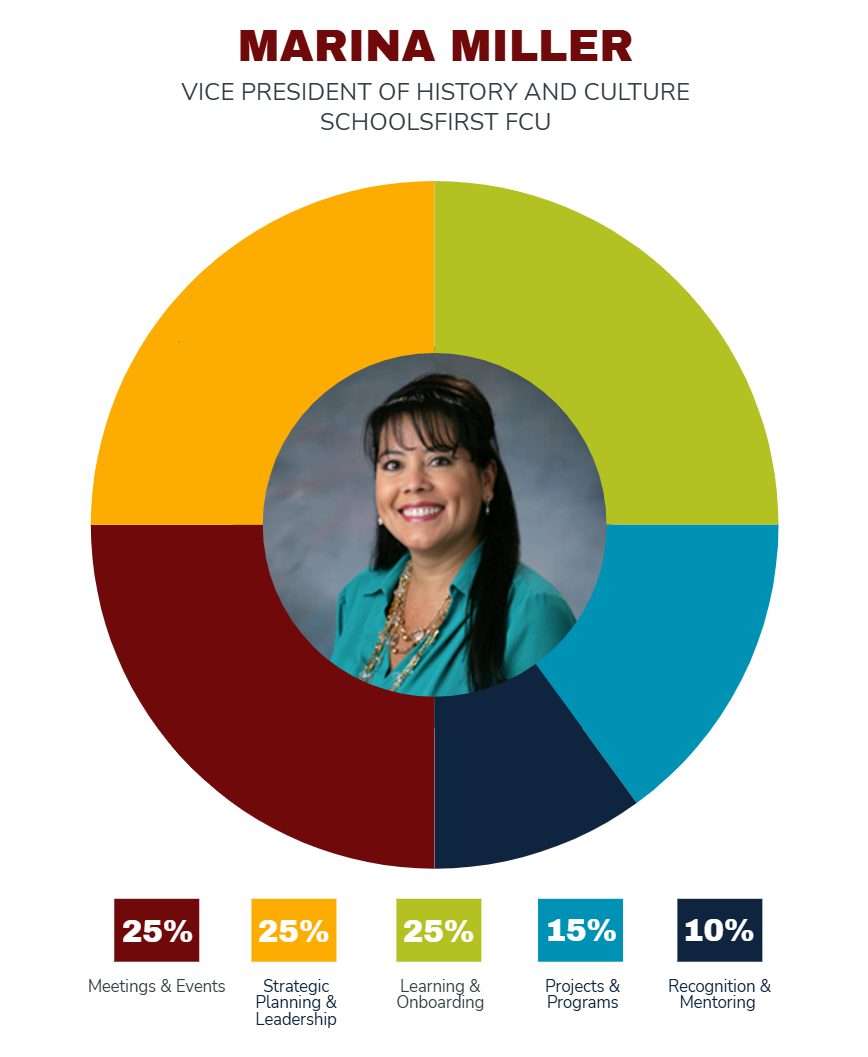
What is your elevator pitch when someone asks what you do?
Marina Miller: I’m responsible for ensuring our culture stays alive and our values are embedded into everything we do. I also get to work on finding ways to show appreciation for our team, so recognitions, rewards, and celebrations are hosted in my area. We know that if we take care of the team, they will take care of the members. That’s been our secret sauce.
We’re 92 years strong at this point. It’s important we understand where we came from so we know where we’re going. In our new corporate office, we dedicated a room to display the rich history and legacy of our credit union. We start with the beginning of the credit union movement and walk through the years of how SchoolsFirst FCU — then known as Orange County Teachers Credit Union — was formed and who our founding fathers were. We have wonderful pictures and artifacts built out in the space. It is an experience. All of our new hires go through it to understand where we’ve come from and what we’ve done.
What’s the story behind your title?
MM: Rudy Hanley was the CEO here for 32 years, and when he retired, he said the one thing that kept him up at night was wondering what was going to happen with the culture of the credit union. He led with a member-service focus, and that’s what we’re here for.
We took a lot of time trying to figure out the best way to keep our culture alive. He felt it was important to create a position, which is the position I’m in now, to preserve the history and culture for the credit union, and he felt I would be the person who could lead it. What an honor to have your CEO approach you and say, “I want to make sure our culture stays alive and that our history is always at the forefront, and I want you to lead that.”
It was an opportunity I could never say no to. I was flattered, and I hope I’ve made him proud. We’ve really grown the role, and it’s been infused into everything we do.
What makes your role interesting?
MM: To take our history and make it interesting and relevant to today in different ways has been exciting. I also lead the meeting and event technology side of the house, so we’ve been able to lean into video and technology for some of the learning tech. The more new ways to get our history in front of our team, the better. Especially now that we serve the whole state of California, folks don’t always have an opportunity to visit and explore our history room.
CU QUICK FACTS
SCHOOLSFIRST FCU
HQ: Tustin, CA
ASSETS: $36.7B
MEMBERS: 1,568,368
BRANCHES: 73
NET WORTH: 9.4%
ROA: 0.80%
What part of your role energizes you? Conversely, what part challenges you the most?
MM: We serve four different generations of a workforce, and not everybody wants to be taught, recognized and celebrated in the same way. Finding ways to make those connections is a challenge, but I view it as a fun opportunity to make an impact at different levels. Trying to figure out what motivates and keeps team members engaged is interesting — you think you understand it until you don’t, and then you have to pivot.
For our Dream Team conference, an annual event celebrating all 3,000 team members at once, we needed new ways to make connections. We used to do in-person conferences, but today it’s hard to do that, so we had to find new ways to make it more engaging. We came up with an app where we can have interactive activities during the conference for team members to join remotely. That’s been different because we’re going from in-person to virtual but still engaging team members and ensuring they’re able to participate.
Are there any misconceptions about your role?
MM: People think we’re the party people; we’re always just having fun. Little do they know there’s a lot of work that goes into everything we do because everything has to be curated for the special activity or event to ensure alignment and at the same time, stay on budget. We’re very resourceful, and we have to get super creative which can be a challenge when planning over 50 events each year. Team members might not know all the details it takes to make everything come together; they just experience it when it’s pushed through.
What is the No. 1 skill you need to do your job?
MM: A passion to serve.
Could someone from outside the credit union step into this role?
MM: I don’t think you need tenure to be successful in this role. I took the responsibility of this role to a level where I would want to make Rudy Hanley proud. Everything I do is documented — we have photos, videos, we have storyboards, we have printed material about our history. If someone really wanted to be successful in this role, they could learn about it and become engrossed in it. If they have that passion to serve, they’ll figure it out.
Clearly, it would be easier if you knew a little about the credit union’s history, but you can learn that. The right person who has passion and creativity can be successful.
How does your role contribute to the success of the credit union in ways people might not expect?
MM: I have a team of four direct reports, two of whom assist me with organizational events and meetings, a manager who primarily oversees a team of 10 who runs our Dream Team Orientation and Service University, and a fourth person who supports our media and event technology. Our success is the fact that we help tell the credit union’s story. We build a foundation for incoming team members and we help tell the story through technology.
How do you define success in your role?
MM: Through our team-engagement scores and member-engagement scores. They’re outstanding — they’re top class. We try to get the pulse of our team on how they’re feeling, how engaged they are, and we have team members openly share if they have issues or concerns through our annual team engagement survey. We have a great recognition platform that we lead and host — called the Pulse, funnily enough — and our team members tell us how we’re doing.
If your role didn’t exist, what would your credit union be missing?
MM: I don’t know if we’d have as much of a focus on and respect for the past. In the next decade, there’s going to be so many tenured people, with so many years of credit union history who will be retiring and leaving the credit union in the hands of those who come behind us. It will be interesting to see whether it will continue in that same manner.
Why do credit unions need this role?
MM: We need to realize where we came from; some of those humble beginnings and how we made an impact on the lives we serve. We can shape our future with our past if we understand this is where we came from, this is what sets us up for success, and if we continue on this path, we’ll continue to grow and thrive. That says a lot about who we are. It’s all of those member stories and the impact we make in the school districts and the way we give back to the communities we serve. We are definitely here to serve our members, not ourselves, and people need to understand that difference.
What should people know about your role that you haven’t addressed already?
MM: Our stories and impact we make to the communities we serve extend beyond our doors. Whenever we need to rally on the legislative front, we have a story to tell and we’re ready to put it out in front of them. It’s not just internal, it’s about how we continue to stay at the forefront when it comes to the political scene.
This interview has been edited and condensed.
Member engagement begins with employee empowerment. SchoolsFirst FCU’s investment in culture, from onboarding experiences to recognition programs, reflects what Gallup research confirms: when employees feel connected to the mission, they deliver experiences that build emotional trust and drive member loyalty. The Member Engagement & Financial Wellbeing Consortium helps credit unions activate this internal shift from the inside out. Learn more.