One New Hampshire credit union wants to make an impact in setting students up for career success.
For the past 20 years, Holy Rosary Credit Union ($487.1M, Rochester, NH) has operated a career and technical education (CTE) banking program at Spaulding High School through the Richard W. Creteau Regional Technology Center, pairing classroom instruction with an on‑campus branch. This year, enrollment is at full capacity. There’s even a waitlist.
But it wasn’t always that way.
The New Hampshire cooperative made some changes due to the impact of COVID. Because the program relies heavily on hands-on instruction, a staffing gap and lack of in-person instruction put its future at risk. Five years ago, Carlynne Pouliot, who was at the time assistant vice president of financial services, stepped in to rebuild the program. Today, it’s on firmer footing.
“It’s really evolved in the past four years,” Pouliot says. “This is our most successful year since the pandemic.”
According to Pouliot, who is now vice president of retail and business development, student feedback and a deeper relationship with school administration has helped strengthen the program. The biggest factor, however, was finding the right teacher.
“I have the best students,” says Kayleigh Erwin, who has run the program for two years. “Yes, they can be a little silly. Of course, they’re high schoolers, but they are still hardworking.”
Real World Experience Is The Differentiator
Sometimes, the best way to learn is by doing. HRCU’s flagship course is Banking & Financial Support Services, a year-long course that blends financial literacy with workforce development.
In the classroom, students cover personal finance topics such as budgeting, saving, and investing while also learning about banking regulations and working with members.
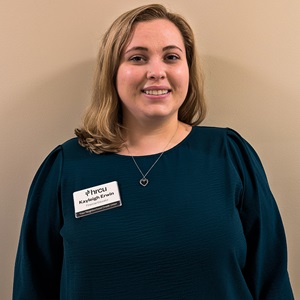
“The first month is learning cash handling, confidentiality, and our teller system,” Erwin says. “Even if they don’t go into banking, it’s usually their first customer service experience.”
The on-campus branch is open three days a week, and each student is assigned one shift per week as a part of their instruction. There, they handle real member transactions with the same systems tellers use in all HRCU branches. Additionally, students in the Hoy Rosary banking program have the opportunity to earn college credit.
“Students in the tech center can earn three free college credits, so this helps them save money,” Erwin says.
Last year, Erwin worked with Great Bay Community College, submitting her credentials and curriculum for approval. Now her class counts as ECON 225 Personal Finance (worth three credits).
Pouliot says this helps to further connect academics with real-world careers.
“Research shows students who earn college credits in high school are more likely to enroll, stay enrolled, and graduate,” she says.
Students in the year-long program can also earn a $750 scholarship from HRCU based on their performance.
Students who might not want to commit to a year-long class have the option to take Introduction to Banking. This eight-week feeder course for the main program covers the same personal finance topics but offers a more general overview of banking concepts and industry basics, such as the history of the credit union movement. The shorter format lowers the barrier to entry and has proved to be popular.
“It increased enrollment,” Pouliot says. “Next year we expect 20 students, split into two classes. We have already filled next year’s program.”
Student Growth. New Opportunities.
The program’s growth and popularity has enabled HRCU to offer an expanded extended learning opportunity (ELO) this year. This advanced, individualized experience is designed to allow select students to take full ownership of branch operations.

“One of our students this year will be an intern next year running the branch for a dedicated class period,” Pouliot says. “She’ll have a job description role responsibilities. We’re fully confident in her skills.”
Responsibilities include opening the branch, managing a cash drawer, and handling day-to-day operations on their own. The role also extends beyond the classroom, incorporating a paid internship component during both the school year and summer.
What sets the ELO apart is it’s fully self-directed.
“There is no curriculum,” Pouliot says. “We create a job description, they come into the role, and then they self-operate. They have to connect back to the ELO director about their training, their experiences, and the projects they’re working on.”
The credit union trusts these students to operate at a professional level, making this the highest tier of responsibility within the program and a direct bridge to workforce readiness. Moving forward, HRCU hopes to expand this offering to accommodate more students in the future.
Enrollment and participation are important success metrics for these courses, however HRCU also monitors branch usage, account openings, and how effective the program is as an opportunity to help students adapt into the career world.
In regard to that last item, the credit union has multiple success stories, including one from several years ago in which a former student stuck with banking and eventually returned to work at HRCU as its consumer lending manager. According to Pouliot, they remain in the industry to this day after moving to a different state.
More recently, a student who graduated from the program last year as a senior is now working full-time in the credit union’s main office.
“We also hired a part-time student from our program last year,” Pouliot says. “He’s in his junior year of high school, so he works with us every Saturday.”
Evolution Based On Student Voices
Perhaps the biggest reason the banking program is so popular is the fact that student feedback plays such a major role, not just in how HRCU structures classes but in how it approaches youth banking overall. This year, HRCU established an annual volunteer student focus group open to all students.
CU QUICK FACTS
HOLY ROSARY CREDIT UNION
HQ: ROCHESTER, NH
ASSETS: $487.1M
MEMBERS: 25,219
BRANCHES: 5
EMPLOYEES: 83
NET WORTH: 9.2%
ROA: 0.99%
Pouliot says it’s been an invaluable resource.
“Every piece of data we’ve got from those focus groups we’ve put into play,” the VP says. “Now, marketing and I can present to our executive team about how we can restructure our teen accounts based on the feedback we’re receiving from those focus groups.”
Student insights support services, too, not just products. For example, students told HRCU they wanted to know more about budgeting, so the credit union is hosting a seminar on the subject in May just for them. Erwin says there’s a strong interest in how savings and credit work, and she receives several questions about how students can get the most out of their money. She also says students are a lot more engaged than some might think.
“There’s a misconception that students aren’t motivated, but that couldn’t be further from the truth,” she says. “They want to learn, attend college, and give back. They challenge themselves. They hold jobs while balancing CTE, clubs, and volunteer work. They are working.”
Hands-On And All-In
Pouliot says HRCU’s banking program relies heavily on participation from credit union leadership and strong integration with Spaulding High School and the surrounding community.
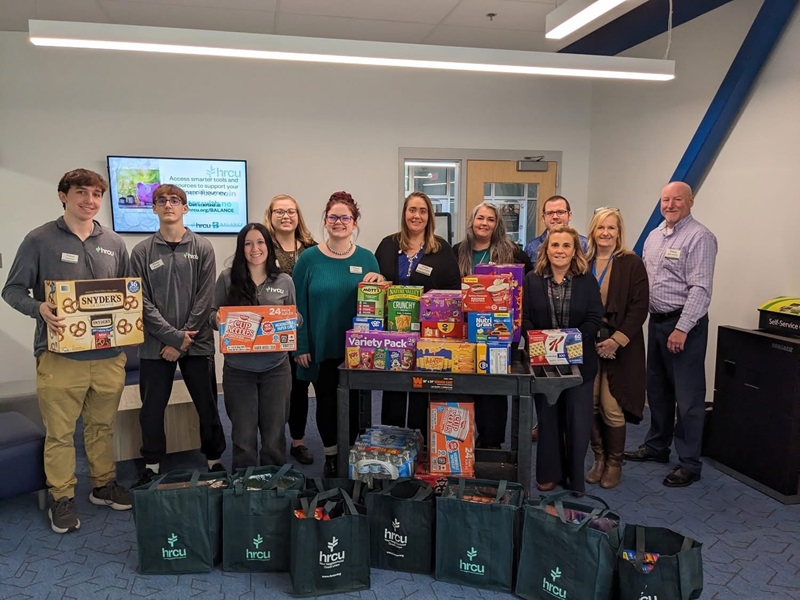
“Our board is hands-on,” she says. “We have our chair of the board, our vice chair of the board, and another board member who attend the focus groups. When we do donations at the school, the board comes.”
The credit union also hosts panels with employees from different departments so students can see different career paths that are available.
“We invite the business program, the marketing program, and our banking program,” Pouliot says. “It’s a well-rounded panel.”
The value of a strong relationship with school administrators also cannot be understated.
“Anytime we have challenges, we go to the school administration,” Pouliot says. “There’s a director of the CTE and she really helps us create our partnership. We work together as one big team.”
HRCU even attends open houses and orientations for incoming eighth graders, and credit union staff are regulars at events like fundraisers and sports games.
Concern for community is one of the industry’s cooperative principles, and it’s one HRCU emphasizes when working within the school. For example, after learning how many students rely on a local food pantry, the credit union and its student participants began making regular contributions, including organizing donations and physically helping stock it. Students also attend community events the credit union is involved in.
“They’re giving back to their peers, and they value it,” Pouliot says. “They embrace the community impact of the credit union, and that’s huge.”
Next-Gen Members. Next-Gen Relationships.
Early engagement can build relationships that last a lifetime. Callahan Webinars highlight real-world stories of credit unions that have turned youth programs into long-term member relationships. Explore the catalogue today.