What’s In A Name: Chief Efficiency Officer
Kelli Wisner-Frank serves as the linchpin between finance and innovation at Community Choice Credit Union, aligning automation, smarter processes, and cost discipline to turn front-line

Your hub to learn how credit unions manage assets and liabilities, boost non-interest income, improve efficiencies and productivity, and maximize returns.
Kelli Wisner-Frank serves as the linchpin between finance and innovation at Community Choice Credit Union, aligning automation, smarter processes, and cost discipline to turn front-line

Craft breweries demonstrate how commitment to value, operational agility, and community focus can ignite growth and drive property.
Inflation, debt, and income inequality are fueling a K-shaped, post-pandemic recovery, widening the gap between different economic segments and challenging lower-income households.
Motivating staff can be a challenge. With a focused program on hiring, training and coaching, Partners FCU is encouraging employees with minimal monetary incentives.
Travis Credit Union shares three practices for structuring a remarketing program.
Online mortgage application capabilities are helping credit unions achieve strong results.
Like everything else in Texas, indirect auto lending is big. Find out how one credit union successfully broke the mold of the typical Texan program.
Turning around a card portfolio is possible. As Community First Credit Union highlights, devoting time and energy to a program can deliver results.
Bull’s Eye Credit Union has realized over 50 percent growth in its credit card loans last year. Find out the top ten credit unions by credit card growth and the secret to success for Bull’s Eye.
Whitefish Credit Union in Montana ($563m) offers minimal services — no checking accounts or credit cards. Yet last year it experienced 20 percent asset and 29 percent loan growth thanks to its successful strategy.
BECU and Superior FCU believe that the payoff of political activism lasts well beyond any elected official’s term limits. They have successfully implemented year-round efforts to build and maintain relationships with legislators.
Are we ignoring the competitive difference that makes credit unions unique? The largest credit union charter conversion yet will be put to a vote in November – what does an action like this mean for the industry?
Efforts to make the benefits of the credit union industry more transparent are paying off in California.

Coastal Credit Union evaluates fintech through the lens of member value, strategic growth, and organizational readiness to implement new ideas.

Credit unions are making decisions about where to build, invest, and partner as they balance today’s priorities with tomorrow’s opportunities.

Industry leaders share how they approach fintech investment, balancing immediate needs with longer-term bets while keeping member value and mission at the center.

Credit unions that enable seamless movement between fiat and digital assets position themselves as a trusted on- and off-ramp.

The credit unions that win the next generation will be the ones that showed up early, when young members were forming habits and deciding whom to trust.

The challenge is no longer whether to adopt AI, but how to adopt it responsibly with the right governance, the right partners, and the right balance between technology and human oversight.
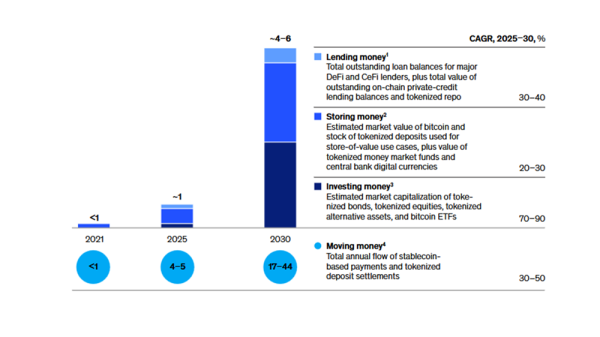
McKinsey projects trillions of dollars in growth across digital assets, with money movement emerging as one of the biggest opportunities.

The Indiana cooperative blends internal development with selective partnerships to meet members’ needs today now while positioning for what’s next.

The San Diego cooperative leans on its CUSO and the CURQL network to make fintech investments, but member needs still guide which solutions ultimately make it into the credit union’s operations.

Hands-on work with artificial intelligence tools is future-proofing staff members, giving them the confidence to adopt new technology and embrace efficiencies.