Innovation At The Speed Of Payments (Part 1)
Credit union leaders share how they’re navigating the fast lane of payments innovation—balancing speed, trust, and tech to meet rising member expectations.

Our Ops& Payments page is the hub for credit union-tested and approved methods to increase usage of checking accounts, credit cards, bill pay, and more.
Credit union leaders share how they’re navigating the fast lane of payments innovation—balancing speed, trust, and tech to meet rising member expectations.

In a rapidly evolving payments landscape, Gen Z prefers simpler, frictionless systems.
Congress is considering new legislation around cryptocurrency, and these new tools could have profound implications for the industry.
Credit unions are taking more interest in Account-to-Account (A2A) transfers, also commonly referred to as Member Directed ACH or inter-institutional transfers. This technology enables members to move their money freely from one institution to another over the Internet. This service transforms the member’s share draft account into an e-checking account.
Stanford Federal Credit Union replaced its home page on the World Wide Web today. This is not strange as the credit union adds, subtracts and tweaks its online presence on most days. The difference today is that SFCU members and other visitors to www.sfcu.org will see the home page that the credit union first used ten years ago. SFCU is celebrating the tenth birthday of its Internet Banking servi
Navy Federal offers the newest solutions in mobile wallets and shares how smaller credit unions can, too.
Patelco Credit Union tracks referrals from front line staff to their investment program. Doing so has lead to increased wallet share.
You shouldn’t have to wait for your first million to see a decent return on your money, was the message of BECU’s ($7.6B, Seattle, WA) commercial to promote their Member Advantage and Early Saver Programs, for members younger than 18.
After discussing Neighborhood CU’s community charter strategy, Mark Arnold, SVP, discusses the tactics used to grow members in this Part Two article.
Using the benefit of hindsight, one credit union shares its steps to a successful data processor conversion.
Many credit unions just issue a debit card to their members with a checking account. Learn how Patriot FCU, University FCU and Citibank structure their programs.
In its ninth year of operating an in-school branch at Monroe Elementary School, UnitedOne has surpassed both its initial and revised goals for deposits.
Between common-interest affinity programs, low rates, and monthly cash back rewards, Pentagon has clearly put the member first in credit card lending.
First quarter data shows how rising costs are pushing consumers toward flexibility and reshaping borrowing and saving habits.

A dedicated CUSO holding company allows WSECU to move beyond building and back fintech partners it helps shape and scale.

Advancial FCU links internal service standards, employee feedback, and peer recognition to create a more consistent experience for both staff and members.

MSUFCU takes a hands-on approach to fintech, piloting solutions through its in-house lab before scaling and backing them through a wholly owned CUSO.

Affinity Plus FCU has a clear member service mantra: digital for daily, human when it’s hard. Its CEO and CFO share what that looks like in practice.

The New Hampshire cooperative shares how its fintech arm, Service Ventures, evaluates investments, balances risk, and defines success.

Industry leaders share how they approach fintech investment, balancing immediate needs with longer-term bets while keeping member value and mission at the center.

New data from Gallup shows half of all employees who work for companies that pay for AI tools use them. Credit unions are building their own momentum.
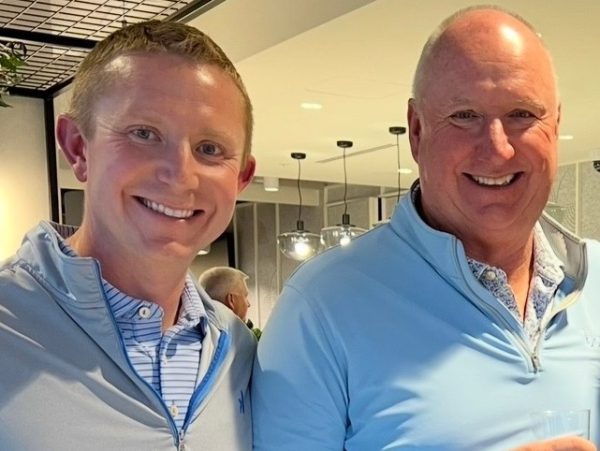
For Mike and Dave Valentine, the family business just happens to be credit unions. The father-son duo talk leadership styles, cooperative values, and the lessons they’ve learned from each other along the way.

People who are truly financially thriving have both means and a sense of security that comes from confidence about the future. Building that kind of emotional engagement requires a deliberate design of everyday interactions.