Aligning Recruitment Efforts With Boardroom Value
A report from Quantum Governance reveals a gap between board recruitment priorities and the most valuable skills in governance.

Your resource for the credit union industry’s best practices when working with boards and volunteers, regulators, strategy, member value, and CUSOs.
A report from Quantum Governance reveals a gap between board recruitment priorities and the most valuable skills in governance.

Six credit union leaders share how they are balancing innovation and governance while deploying new tools.
Member growth is slowing. What can credit unions do about it? Callahan experts explore how purpose and financial wellbeing might be the key to sustainable
Credit unions exist to serve members, and the Return of the Member (ROM) scoring system is designed to measure how well credit unions live up to this task.
Superior experiences don’t start when members walk through the door; they start when employees commit to WOW service.
Planning ahead both retains talent and eases the transition when a talented manager leaves.
How credit unions today are creating more profitable members through segmentation strategies.
The Ohio Credit Union League offers resources such as discussion groups and file-sharing libraries to ease the burden of complicated regulations.
Making a pledge to members in 1997 that Cascade FCU, Seattle, has no intention of merging with another financial institution Dale Kerslake, CEO, promised to pay members $100 if the CU merged and as a result changed its name, a member’s account number or closed a member’s primary branch within a five-year period. Six years and counting and there’s no payout in sight.
Disclosing executive salaries is not a regulatory issue; rather, it can be a marketplace advantage. Keeping compensation private only suggests that credit unions have something to hide.
Quantitative facts covering almost every aspect of credit union activity are abundant—and becoming even more plentiful. Many users of data are seeking answers. The issues range from the general, “How-am-I-doing?” to the specific, such as “Should-Iraise-my-NSF-fee?”
Georgetown University’s student-run credit union is cognizant of the duration of its investments and has developed strong cash positions.
A hang gliding anecdote from Jim Blaine, CEO of State Employees Credit Union, offers insight into what it takes for a credit union to truly take off.

Coastal Credit Union evaluates fintech through the lens of member value, strategic growth, and organizational readiness to implement new ideas.

Credit unions are making decisions about where to build, invest, and partner as they balance today’s priorities with tomorrow’s opportunities.

Industry leaders share how they approach fintech investment, balancing immediate needs with longer-term bets while keeping member value and mission at the center.

Credit unions that enable seamless movement between fiat and digital assets position themselves as a trusted on- and off-ramp.

The credit unions that win the next generation will be the ones that showed up early, when young members were forming habits and deciding whom to trust.

The challenge is no longer whether to adopt AI, but how to adopt it responsibly with the right governance, the right partners, and the right balance between technology and human oversight.
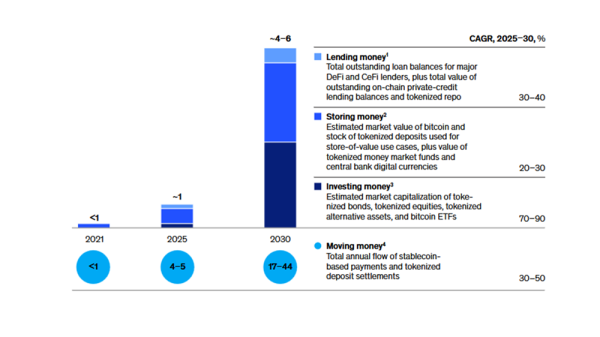
McKinsey projects trillions of dollars in growth across digital assets, with money movement emerging as one of the biggest opportunities.

The Indiana cooperative blends internal development with selective partnerships to meet members’ needs today now while positioning for what’s next.

The San Diego cooperative leans on its CUSO and the CURQL network to make fintech investments, but member needs still guide which solutions ultimately make it into the credit union’s operations.

Hands-on work with artificial intelligence tools is future-proofing staff members, giving them the confidence to adopt new technology and embrace efficiencies.