
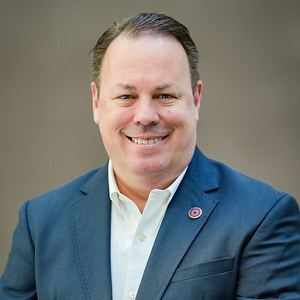
Growing up, Jim Morrell always wanted to be in banking. His grandfather was a community banker and, “probably would’ve been a really good credit union person,” says Morrell, who today is president and CEO of Peninsula Community Federal Credit Union ($303.3M, Shelton, WA).
By the time he hit graduate school, Morrell planned to go into oil distribution, but an accounting professor steered him toward financial analysis work, which led to a credit union career. He’s worked with cooperatives across the Pacific Northwest since 1993, spending the past 13 years at Peninsula.
In this Q&A, Morrell looks back on his career, the lessons he’s learned, and how he works to ensure his personal values shine through with the organizations he leads.
On how the industry has changed in the past 30 years …
Jim Morrell: I was around when we issued software and modems to members to encourage them to consider online banking. Downloading an app is the new version of that. People are used to technology and used to a ubiquitous financial environment, yet even today there are people who are uncomfortable to varying degrees with the use of technology.
One might look at financial cooperatives and say banking is dead. I don’t think so; I think there’s always going to be a need. It’s far too expensive for people not to have a relationship with a financial institution that looks after their wellbeing and doesn’t charge them exorbitant fees.
On the hardest feedback he’s ever received and how it shaped him …
JM: It was people thinking I didn’t care or maybe some combination of I wasn’t listening and other people didn’t want to hear what I was sharing. It gets interpreted in this mental and emotional collision. I really hope I care a lot more than I don’t.
As a leader, you have to learn to take not only criticism but also critical feedback. If I make an error, I recognize and acknowledge it. If it’s an interaction with another person, I’m candid and open and honest with that individual.
One of the things I did for almost as long as I’ve been in the credit union industry was officiate basketball, including 14 years as a D1 women’s official. People yelled at me from time to time — usually about half of whoever was in the arena. I remember on more than one occasion a coach yelling at me and thinking, “You know, we probably agree much more than we disagree, but right now your message is being lost in the delivery.”
If I’m not communicating well, let me know so I can try again.
On lessons from the basketball court …
There was a number thrown out when I was officiating basketball that you have to see the same move that led to a traveling violation 1,000 times before your response becomes reactionary. Giving yourself more repetitions of experiences, of challenges, of opportunities to try to explain things to different audiences is huge. Being engaging and courageous enough to put your voice out there is really important — so is having the friend that will say, “Yeah, your voice is out there too much.”
On receiving the Maurice R. Smith Leadership Award from the African-American Credit Union Coalition …
JM: It took me a while to wrap my head around why somebody should be recognized for doing what I think we should do every day, which is treat one another with care and kindness and love and consideration. One of the things I don’t think has changed over the years is people’s internal desire to be liked, to be heard, and in many senses to be cared for. Somewhere along the way that was summarized in a word like “inclusion.”
Our mission statement has not changed since I got here 13.5 years ago: We listen, we serve, we educate, and we care always. Our team does an amazing job of that every day with our members, and we’ve worked hard to develop an internal culture where we treat one another in the same way: by listening, serving, educating, and caring.
On why DEI still matters for credit unions …
JM: One of the things we’ve done over the past three years is quarterly DEI education for all of our staff. That hasn’t slowed down. It helps support the culture we’re striving to have inside our organization. If we’re accomplishing that, then we do a much better job when we’re outward facing and serving members who have a different socioeconomic or cultural background.
That award flows full circle, and I take it as a reflection of what we’ve done together here as a team at Peninsula as much as about me.
On leadership styles and what makes him stand out …
JM: My hope is that people feel like they have a lot of latitude. I might get frustrated sometimes because I process things fairly quickly and have a lot of questions, but I wouldn’t have the opportunities I do and the organization wouldn’t be where it is if I was micromanaging every decision every hour of every day.
CU QUICK FACTS
PENINSULA COMMUNITY FCU
HQ: Shelton, WA
ASSETS: $303.3M
MEMBERS: 22,173
BRANCHES: 5
EMPLOYEES: 74
NET WORTH: 11.4%
ROA: 0.62%
Do I sometimes push or pull? Yes.
Do I sometimes react too quickly? Probably, yes.
But I hope they realize I know they’re experts and wise about what we do, and I entrust them with doing what we’re asked to do and how we’re asked to serve here.
On the most surprising lesson learned from leadership …
JM: I need to listen more and slow down my reactions. I have a pretty quick ability to process information and think about things from different angles and perspectives. Sometimes that can come off like me not listening or not hearing. There’s a whole lot of information that needs to be heard, whether it’s from the credit union, the movement, or national or international leadership — there are a lot of very valid opinions.
On leadership decisions that changed the trajectory of an organization …
JM: After being here a year and a half and understanding who we are and meeting people in the five distinct communities we’re part of, which are all economically distressed, I made a decision to focus on community development, and our board supported that.
As a CDFI, we started partnering with United Way and adopted ALICE data. All team members have a certification in financial literacy so when we go to domestic violence shelters or meet with people through the YMCA or Kitsap Immigration Assistance Centers or places like that, we sit down with them outside of a desk in our branch lobby and they begin to develop trust in us.
I always come back to empathy, including people, listening to people. That’s critically important.
It’s far too expensive for people not to have a relationship with a financial institution that looks after their wellbeing and doesn’t charge them exorbitant fees.
On ensuring leadership reflects organizational values …
JM: We’ve done empathy mapping and about 10 years ago we created a persona called Alice Pearl. That persona is a litmus test when we get stuck on a decision: What would be most beneficial for Alice Pearl, a single mom with a couple of kids in her mid-30s who’s working two jobs and doesn’t have time to do her banking until 10:30 at night when the kids are in bed and she’s exhausted? How are we helping her?
We’ve done the same thing with empathy mapping through focus groups and the data we’ve obtained through our work with Coopera on Hispanics.
On the leadership advice he’d give to his younger self …
JM: Don’t expect to find a precedent for every decision you’re going to need to make. I still sometimes reach on the shelf for the proverbial CEO manual I think should be there, but it’s not. You have to rely on the fact that, based on your experience, you know you’re doing the right thing. Frankly, it takes having a bit of an ego to know you’re moving in the right direction but not so much ego to ignore when you’re leading people the wrong way.
On the books, podcasts, or experiences that have influenced his approach to leadership …
JM: I shared this with a high school student recently during a financial reality fair. He’s a senior who’s really involved and his leadership skills are very much like mine — he wants to do everything. I encouraged him to err like I have and do more than he thinks he can do because he will grow from it. It’s experiences that I’ve learned from more than listening to podcasts or reading books.
On unconventional leadership habits …
JM: I like getting out on a boat away from all the noise, where it’s just me, the boat, and the water, floating around and staring at the awesome scenery we have so much of here in the Puget Sound.
This interview has been edited and condensed.
“On Leadership” spotlights notable leaders across the credit union landscape by discovering how they joined the movement, learning what makes them tick, uncovering career lessons and successes, and more. Read the series today.