
We have at times sacrificed the bottom line to provide the type of banking our community needs.
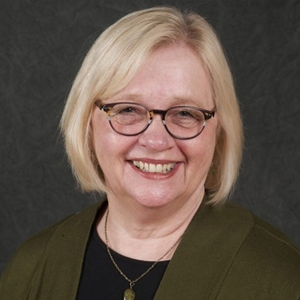
Ask Cheryl Sio for her resume and she’ll tell you she doesn’t have one. She started working at Sundstrand Credit Union at age 20, became president less than a decade later, and stayed put for the next 50 years.
When Sio retired at the end of 2025, she closed the book on a career that began behind the teller line in 1975 and ended with her leading what is now MembersAlliance Credit Union ($284.2M, Rockford, IL). There’s no list of stops or titles to skim, just a single institution and a half-century arc that mirrors the modern credit union movement itself.
MembersAlliance has been in business for 87 years; Sio was there for more than half that time. The cooperative was founded by employees of Sundstrand, a Rockford manufacturer that still exists today as part of Collins Aerospace, producing aircraft systems and engine components.
As the credit union’s original single-sponsor roots gave way to a broader community charter covering the city of Rockford and three Northern Illinois counties, Sio helped guide the organization through deregulation, technological upheaval, and repeated reinventions of what it means to be a cooperative financial institution in a mid-sized Midwestern city.
Here, Sio reflects on her career and legacy at MembersAlliance and for the movement.
Talk about credit union life before interest rate deregulation and modern liquidity options.
Cheryl Sio: For my first several years, we had one share option and one loan option. The savings rate was 6% and the loan interest rate was 1% per month on the unpaid balance. We calculated loan interest manually each time a member made a payment. There were no standardized operating ratios that I’m aware of. Managing liquidity was a simple matter of stopping loan activity, which only happened once in my 50 years.
I recall the craziness of the early 1980s when the interest rates were sky high. I don’t think we changed our standardized loan rate of 1% per month, and along with a two-year growth spurt, we found ourselves lacking in net worth. I don’t think net capital was much of a regulator thing prior to that.
How did NCUA’s charter overhaul change the way you led and served members?
CS: MembersAlliance is state chartered and we’ve been ASI-insured since 1981. That said, the overall effect of charter expansion allowed single-sponsor credit unions a sustainability option by broadening the member base and relieving the pressure of being dependent on one employer.
Many credit unions couldn’t and didn’t survive if the main source of membership was sold, merged with a larger entity, or closed the doors. Our charter expansion allowed us to think about the community we served and how we could make a difference.
Before We Were Callahan & Associates
Cheryl Sio and MembersAlliance Credit Union have a relationship with Callahan & Associates that spans data, consulting, leadership development, and more. Sio’s friendship with Callahan’s founders, however, dates back to the 1970s.
Here she describes:
“When I started at the credit union in 1975, Ed Callahan was the principal at Boylan High School in Rockford, IL. Around the same time, he became director of the DFI (now IDFPR) and was then appointed to the NCUA board in the early 80s. Chip Filson was the credit union supervisor at the DFI. I can’t recall where Bucky Sebastian came into the picture, but he seemed to be an Illinois person as well.
I remember thinking ‘how does a high school principal become the director of the DFI, a position appointed by the governor?’ Fortunately for the credit union movement, he was destined for this career move.
Ed and his team at NCUA, and eventually Callahan & Associates, changed the trajectory of credit unions, making them a viable, thriving financial option for consumers while retaining their original cooperative spirit.
I continue to marvel at how he navigated from high school principal and football coach to a state credit union regulator, chair of the NCUA, CEO of a large and successful credit union in California, and the co-founder of Callahan & Associates.
He was one of the pathfinders who led credit unions to the place they have in society today.”
What innovations in the past five decades have surprised you most?
CS: For the first two decades, everything was mostly manual. MACU kept up with technology, at times more so than banks. For the following three decades, it often felt like we were behind the eight ball. Every time we completed an upgrade, it was already time for the next iteration.
What advice do you have for navigating fintech disruption?
CS: People will always need personal assistance at some point. Technology is grand until it isn’t. If we’re spending all of our time chasing technology, we might be neglecting the need for human connection. Banking is a commodity, so the difference lies in how we serve and treat our members. Are they people we respect and value? Or are they a means of making a profit?
Which cooperative principles have endured at MembersAlliance despite massive change?
CS: I love this question. As the CEO, it was always my desire to honor the spirit of the founders of the credit union. Sundstrand was a local company started by one man that grew to be one of the largest employers in Rockford. It began as an entrepreneurial manufacturing enterprise and evolved into an aerospace company providing research and parts to companies all over the world.
In 1938, a small group of employees formed the credit union to pool their funds to provide small loans to co-workers at a time when borrowing money from a bank was not an option for the average worker.
Our team always tried to honor this by providing a sound, ethical, consumer-focused banking option for our membership. We worked to make enough profit to be sustainable, but our focus was on providing the best possible products and the highest level of individual, respectful, and caring service for our members.
What’s one principle from the past that should guide the next 50 years?
CS: The cooperative nature of a credit union. We are stewards of our depositors’ funds.
What cultural habits — hiring standards, coaching practices, or everyday rituals — most consistently led to better outcomes for members?
CS: As an employer, we viewed our staff as a team, and we helped staff members think of their job as a career. Several staff members have worked at the credit union for many years and have become managers, directors, and vice presidents. Our intent is to give people tools and opportunities to advance their careers.
Looking back, which decision or program best captures the ethos of “people helping people” at MembersAlliance?
CS: Several years ago, our board agreed that excess capital, while a good thing for the regulators, was not truly in the best interest of our members.
When other institutions chose to eliminate receptionists, install call directories, eliminate personal access to loan officers, and more, we chose to keep member-facing personnel for members who prefer genuine human contact.
How do you form community partnerships or credit union collaborations and make those relationships work?
CS: We show up and do whatever we can to promote local not-for-profits and businesses, offering financial education opportunities when and wherever they might be helpful. The impact is not always readily apparent, but we view this as an investment in the future.
Credit union collaborations are a bit difficult these days. Multiple mega credit unions have moved into our area — by way of mergers or purchase — and don’t seem too interested in collaborating or connecting with local credit unions.
Which leadership skill do you wish you’d developed earlier?
CS: It took me 10 years to realize I didn’t have to have my hands in everything. In the 80s and 90s, we went through growth that was at times overwhelming. We were trying to do everything; I’m sure other credit unions were, too.
Fortunately, I had an executive team that had the “whatever it takes” attitude about making things work, putting member service first, and generally stepping into unknown territory. During that time, I learned the importance of teamwork, trust, and encouraging team members to develop their gifts and take the lead.
How would you teach important skills to an emerging leader now?
CS: A few years ago, we enrolled eight directors and managers in an executive team learning program from Callahan & Associates. These were employees I believed to be committed to MACU and what we stand for. I also went through the course so I could understand what they were experiencing and gain the tools to make sure our board was committed to being purpose-driven as well.
I wanted the team to believe they play an important part in MACU’s future and its place in our community. I left the credit union believing MACU will continue as a people-over-profit organization.
How do you define healthy growth for a cooperative? What tradeoffs are you glad you made to protect mission?
CS: For me, healthy growth is organic. If we’re not serving our current members well, we have no business attempting to grow for the sake of growth itself. We have at times sacrificed the bottom line to provide the type of banking our community needs. Such trade-offs might show up in peer comparison rankings in net worth and, at times, growth.
If you could write a letter to future credit union leaders, what would the first line say? And the last line? And the bottom line?
CS: First, as a credit union leader, you are in an excellent position to make a difference.
Second, stay the course, hold true to the cooperative spirit.
Finally, put people and their wellbeing first. The rest will follow suit.
This interview has been edited and condensed.
“Exit Interview” on CreditUnions.com features parting thoughts and wisdom from influential leaders in the credit union movement upon their retirement. Read the series today.