
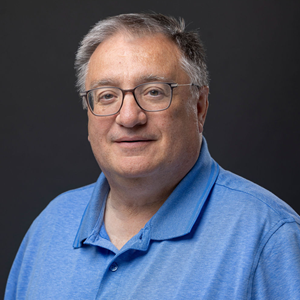
Before joining Firelands Federal Credit Union ($554.6M, Bellevue, OH) as chief financial officer in 2023, Don Rositano built a career at the intersection of banking and membership-driven retail, shaping how he approaches value, pricing, and performance.
Before entering the credit union space, Rositano spent more than a decade with Sam’s Club, where he led finance for a $2.2 billion division. That environment, where members pay for access and expect clear value in return, mirrors the credit union model more than it might seem, he says — and reinforced a core belief he carries into his current role: get value right for members, and the financial results follow.
Personal And Professional Journey
What attracted you to the credit union industry?
Don Rositano: I am fortunate to have been the CFO of two different community-based banks and most recently was the senior finance manager of a $2.2 billion division of Sam’s Club out of Bentonville, AK.
I loved working for Sam’s, but Cleveland is my home. My family and kids are here, and we were ready to be closer to them. When the CFO opportunity at Firelands came up, I felt my banking and membership experience would dovetail nicely. At Sam’s, we understood members pay for the privilege to shop there; that’s our philosophy at the credit union, too.
What has surprised you about working in the credit union space?
DR: One of the biggest surprises is that profitability is not the focus, people are. In my prior position, I had to reforecast our profit and sales projections every week, and we needed to produce solutions if we were suffering a shortfall.
At Firelands, although we need profits to fund growth, serving our members is our priority goal, and we forecast to meet their needs. Our profitability is a by-product of those relationships. In the three years I’ve been here, our cumulative annual growth rate is 10.46% — without mergers or adding branches — and our ROA has jumped from 0.66% to 1.41% year-to-date.
The Credit Union Learning Curve
How would you compare the culture of credit unions to your previous industry?
DR: There are a lot of similarities between Sam’s Club and Firelands. Both companies are driven to provide ultimate value to their members and to curate product offerings to reduce confusion and maximize value. Many companies like to provide products and services that have all these bells and whistles when what most members want is a great product at a great price.
Did you have any misconceptions about credit unions when you joined?
DR: As a former banker, my viewpoint was limited by industry misconceptions. I felt credit unions were behind in innovation and technological sophistication. Credit unions were the institutions you went to for auto lending and Christmas Club accounts.
The longer I’ve been in this position, I realize how wrong I was. Credit unions can master the balance of national competition, service, and evolving technology while still taking care of and seeing the member as an individual instead of a number.
What challenges did you face transitioning into the credit union space?
DR: Credit union jargon. Calling deposits “shares” and interest “dividends” has taken me a while. I’ve also had to change my thinking about profitability and service. I’ve spent a lot of time on nonprofit boards, and I love this serving philosophy in our company.
Leadership And Strategy
How did your prior financial services experience shape your leadership approach at the credit union?
DR: At Walmart, there would always be times when other retailers were cheaper, and we understood that. We wanted to be the consistent price leader, not chase a short-term discount. At Firelands, we’ve been trying to position ourselves so members are better off overall with our products than anywhere else.
For example, in my first year, we increased our primary share rate well above the rest of our competitors. We were able to create some savings in one of our expense categories and instead of dropping those savings to our bottom line, we reinvested them in higher yields on members’ dividends.
CU QUICK FACTS
FIRELANDS FCU
HQ: Bellevue, OH
ASSETS: $554.6M
MEMBERS: 36,461
BRANCHES: 6
NET WORTH: 9.5%
ROA: 1.25%
What lessons or strategies from your career have proven most valuable in your credit union role?
DR: At Sam’s I learned the importance of viewing pricing specials as an investment versus a cost. The goal is to offer something well-priced and use this as a gateway to have them experience more of the club.
I’ve used that same mindset at the credit union, and we have offered aggressive CD rates for shorter terms of four to seven months. We’ve found we do not lose this money when the CD expires, and the higher rate inspires higher loyalty.
We also never have a special only for new money. That tells existing members they are not as important. We’re in it for the long term. Our mindset has resulted in gaining greater share of our existing members’ wallet.
In addition, we offer a well-priced money market account where our highest yield right now is 3%. Our money market accounts have grown 40% in 2024 and 30% in 2025. Our members want an excellent rate but also want liquidity and freedom to move their money.
As a bonus, I enjoy paying a lower rate versus CDs and appreciate the flexibility to adjust rates based on market ebbs and flows.
What aspects of leading a credit union required a completely new mindset or skillset for you?
DR: Sam’s is a destination club. When I left, it had around 600 clubs throughout the nation. It can afford to invest in the largest markets because members will come. When I worked in a club, we had members who would come from 60 miles away every month to stock up.
However, many credit union members need physical closeness of a local branch. Not that they necessarily use it, but they want the comfort of knowing it is there when they need it. We are investigating ways to meet those needs while balancing the high costs of an extensive branch network.
Members-First Focus
How did you adapt to the members-first model? Are there parallels to your previous roles?
DR: I came from a member-focused organization. It bothers me when I see financial institutions focus more on profits than customers. For example, we have many banks around us that might offer a nice special CD rate, but they keep their basic rates below 1%. If a customer does not inquire, they will go from a 4% special down to a 0.15% CD rate as it rolls over. I find that unethical and anti-customer.
How have you helped improve member engagement or services?
DR: We are looking forward to making some adjustments to our checking accounts. Members want a payment mechanism at a low cost. We listened to what members are asking for, and we’ll be adding member send capabilities for both RTP and FedNow.
There’s fraud risk with these payment streams, and frankly, we need to be OK with some losses to offer these services. If we don’t, members will move to other financial institutions or fintechs that offer them. In the next few years, it is going to be a requirement as a financial institution to be in business. The writing is on the wall; I don’t want to be left behind.
Advice And Future Outlook
What advice do you have for someone considering an executive role in a credit union, especially if they’re coming from another industry?
DR: Be open to the process and understand it can be tough because we answer to members and not to shareholders. The most critical thing they need to understand is that we need to be member focused.
If you do what’s right for the members, they appreciate it and the business will grow. It’s satisfying hearing other bank employees say how wonderful we are and if they cannot do something, they refer the customer to us.
You also need to be active in the community. I’ve walked in parades; I’ve manned an inflatable slide at a community festival. If you have no desire to be part of the community, then maybe a credit union is not for you. We’ve assumed many leadership positions that community banks used to lead.
How might your prior experience help shape the future of your credit union’s strategy?
DR: I’ve been the main proponent of bringing in a data warehouse. I’ve seen the power of analytics and the ability to drive business through understanding our own membership base. A warehouse lets you see where you should focus your limited resources to help the most members, and that can drive your growth.
Harvard did a study a while back that showed the more options you offer a customer, the more confused they become about what to buy. And sometimes they purchase nothing.
I looked at our product line at Sam’s and noticed we had several products that were not profitable. We reduced our product line by more than 40%, saw a 1% to 2% reduction in sales over the next 12 months, but saw a 25% profit improvement. It also set up the division in the following years to increase sales faster than the rest of the market.
Personal Reflections
What’s been the most fulfilling part of working in the credit union space?
DR: I love our place in the community. Our CEO goes to different county fairs and makes sure each 4H participant gets a fair price for their entry. We’ve spent $75,000 on these fairs, but the smiles on the participants’ faces are priceless. We’re the champions of the underdog and pride ourselves in making sure no one is left behind.
If you could give yourself advice on your first day at a credit union, what would it be?
DR: Don’t get too anxious to perform. Learn the culture of the credit union and look for ways where you can enhance it. Enjoy the ride. It’s a rewarding experience.
This interview has been edited and condensed.
What can you learn from like-minded leaders? Don Rositano’s path from Sam’s Club to credit union CFO is a reminder that the best strategic instincts often come from unexpected places. Callahan Roundtables put credit union finance executives in the same room to share what’s working, pose hard questions, and learn from peers navigating the same challenges. Learn more and register.