
For decades, credit unions have championed financial literacy as both a moral imperative and a competitive differentiator. But today, in an age when information is abundant and access is not, literacy alone is no longer enough. In fact, stopping with literacy might even fall short of the movement’s mission.
That realization landed with force for Tracy Verner, community development manager at Alltru Federal Credit Union ($392.5M, Wentzville, MO). After years of watching members absorb financial education but remain boxed out of the system, she began pushing the cooperative to rethink what real progress looks like — what financial empowerment looks like.
“Financial empowerment is information combined with access,” she says. “Many financial institutions offer well-meaning financial literacy — workshops, gamified apps — but it’s still just information. We’re doing an injustice if we provide information without the tools to apply it.”
The philosophy has changed the way the St. Louis cooperative operates, from product design to employee training. The result? Stronger culture, deeper partnerships, and helping more people who otherwise might have remained unbanked.
Gaps And Barriers
To truly empower members, it’s necessary to understand the barriers they face and examine who the credit union is not yet serving.
“If you’re truly committed to empowerment, it’s your responsibility to provide access,” Verner says. “Credit unions were built on inclusion, so ask: ‘Who’s being left out, and why?’”
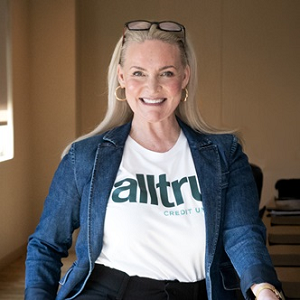
An early experience in Verner’s credit union career underscored to her the importance of doing things differently. Speaking with a workshop attendee after an event, Verner learned the woman couldn’t open a checking account.
“I was floored,” Verner says. “She had steady income working for the city of St. Louis but couldn’t access a checking account. This was before fintech tools like Venmo or Cash App. She was receiving paper checks, and when the city stopped issuing them, she was forced onto a prepaid card with fees.”
Verner met with her boss and learned the woman had an incident in her ChexSystems report that barred access to checking. In these kinds of screening systems, even a single overdraft charge can easily turn a short-term issue into a multi-year obstacle. At the end of 2025, approximately 6% to 7% of U.S. households were unbanked, according to Bankrate, largely because of prior banking problems.
So, Alltru turned ChexSystems off.
“This was before the Bank On movement even reached St. Louis,” Verner says. “Altru was already questioning those barriers. Leadership was already asking why.”
Don’t stop here. The community development manager at Alltru FCU turned in her barbells for bank accounts and is building access one account at a time. Read more in “Tracy Verner Is Breaking Barriers In St. Louis Finance.”
Expanding Access Without Increasing Risk
Opening access at scale shifts responsibility inside the institution and can raise questions about risk management, making effective collaboration with finance and compliance teams essential.
“Our compliance manager tracks outcomes closely,” Verner says. “We’ve found people flagged in ChexSystems do not show higher fraud or delinquency rates. The data simply doesn’t support the perceived risk.”
Alltru regularly evaluates programs and purposefully keeps guardrails flexible. For example, the credit union noticed an issue involving fraud through ATM deposits among its youth workforce program. So, it pivoted.
“Instead of shutting it down, we increased our fraud education efforts, reduced ATM withdrawal limits, and added monitoring,” Verner says. “We didn’t stop the program. We refined it.”
CU QUICK FACTS
ALLTRU FCU
HQ: WENTZVILLE, MO
ASSETS: $392.5M
MEMBERS: 40,729
BRANCHES: 5
EMPLOYEES: 131
NET WORTH: 9.5%
ROA: 1.06%
Alltru takes the same creative approach to lending. Traditional secured loans tend to rely on upfront cash or collateral. That’s a barrier for members without savings. Alltru’s credit builder loan removes that requirement, although it doesn’t release funds immediately to reduce risk while still helping members build credit. In practice, however, early usage indicated Alltru needed to recalibrate the loan.
“Initially, it was $1,000 over 12 months,” Verner says. “We realized some members couldn’t handle that.”
Today, the Missouri cooperative offers loan options as low as $300 because even $30 every month can help members without creating excess financial strain. Alltru has also gradually leaned into relationship lending, and half of its first-time auto loan borrowers don’t have a credit score.
“You start with good intentions,” Verner says. “Then you refine based on real needs.”
Empowerment As An Organizational Mindset
Financial empowerment starts with understanding the consequences of credit union decisions. Verner spends time in the community working alongside nonprofits and listening to members outside the branch to identify where well‑intended policies still limit access.
“Being in the community, working with nonprofits, seeing real challenges brings up more questions,” she says. “It forces you to ask why.”
Of course, asking why only matters if it changes how people make decisions, which is why financial empowerment at Alltru also rests on a shared understanding of what it means to struggle, how strain shows up in everyday life, and who needs support.
“The rising costs of housing, groceries, and auto loans have impacted everyone,” she says. “This isn’t someone else’s problem. This is about our neighbors, families, and even our coworkers.”
That awareness changes decisions, from product design to flexibility at the margins. As a credit union focused on empowerment, Alltru is willing to look for ways to preserve access instead of restrict it.
Forward-thinking credit unions are leading with financial wellbeing. Alltru FCU’s evolution from education to true financial empowerment reflects a broader shift across the industry. The Member Engagement and Financial Wellbeing Consortium, led by Callahan & Associates in collaboration with Gallup, helps credit unions embed financial wellbeing into strategy, product decisions, and culture. Through shared insights and peer collaboration, participating credit unions are aligning around what drives real member confidence, engagement, and long-term growth. Learn how the Consortium is helping credit unions turn empowerment into measurable impact.