
You’re not just there to give them that financial perspective. You’re also there to build trust with financial institutions that they might not have had in the past.
Roughly 2 million people are incarcerated in U.S. prisons at any given time, and those passing through the justice system often face severe economic hardship, limited access to healthcare, and social disenfranchisement after release.
The social stigma and lack of access to resources leave many in a destructive cycle. More than 60% of formerly incarcerated individuals will be arrested again within three years; more than 70% will be arrested again within five years. However, they are 24% less likely to return to prison if they acquire new skills during incarceration.
Those who maintain employment for one year post-release experience a recidivism rate of just 16%. That’s great news, but this group then faces a different set of challenges. According to the Bureau of Justice Statistics, more than 60% of incarcerated individuals have little to no formal financial education, leaving them unprepared for stable employment, housing, and legal obligations upon release.
Closing that gap aligns squarely with the credit union ethos of people helping people. Just ask Jennifer McHugh, vice president of community engagement at Royal Credit Union ($5.7B, Eau Claire, WI).
“We’re all about financial wellbeing,” she says. “But it can’t just be for some. It’s financial wellbeing for all.”
Eleven Years, Eleven Correctional Facilities
Royal began working with inmates at the Eau Claire County Jail in 2015, presenting classes covering all aspects of money management, from understanding spending habits to paying off debt. More than a decade later, its incarceration program now spans 11 correctional facilities, including six county jails, four state prisons, and one juvenile detention center. It now offers classes virtually or in-person, with average attendance ranging from 10 to 15, although some sessions might have just one participant.
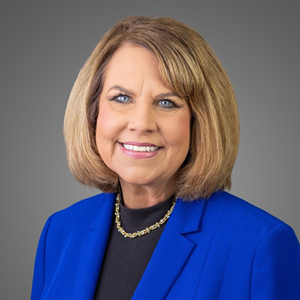
Two community financial education coordinators handle the lion’s share of the work, each operating one half of the region from Northwest Wisconsin to the Twin Cities Metro area. However, as the program has grown, other credit union team members have stepped in to volunteer to teach as well.
“You’re only as good as your people, and our team members are truly passionate,” McHugh says. “It fills their cup when they’re able to go into a facility and make a difference. That’s one of the things I love about this program.”
In 2019, the credit union won a grant through the National Credit Union Foundation that enabled Royal to conduct academic research with a university partner into the impact the program is making.
The results were exciting.
Don’t Stop Here
Interested in more insights? Check out Royal Credit Union’s white paper in partnership with the National Credit Union Foundation.
“We found most of our students came to class with a pretty solid basic understanding of financial concepts,” McHugh says. “What they needed was more confidence to address, maybe work through, some past issues they’ve had.”
Program participants show statistically significant gains in attitudes and confidence levels as well as knowledge surrounding credit and how someone’s money personality can affect their spending.
Instructors say students who have gone through the program frequently thank them, not only for sharing the information but also for treating them with dignity during classes.
A Pathway To A Fresh Start
When American 1 Credit Union ($649.7M, Jackson, MI) sought to establish its own program for inmates last year, it reached out to Royal Credit Union for guidance.
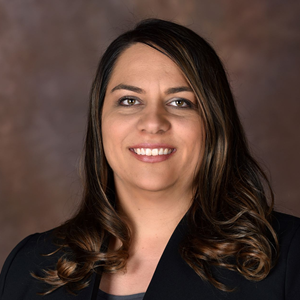
“They helped me understand what to look for and how to build a relationship with the Michigan Department of Corrections,” says Carolyn Duncan, American 1’s chief member experience officer.
American 1 is headquartered in Jackson County, home to the largest prison facility in Michigan and one of the largest prison locations in the world. Over time, this has had a lasting effect on the community the credit union serves.
“For years, family members have moved to the area because a family member is incarcerated here,” Duncan says. “So, we’re looking at not only who’s incarcerated but the family that surrounds them during this journey.”
After carefully researching MDOC’s strategic plan and its specific needs, Duncan reached out to Jackson College, which was already offering college classes at multiple MDOC campuses. That opened the door for American 1 to partner with the MDOC directly.
Today, the cooperative’s work revolves around the MDOC’s Vocational Village, a trade school for prisoners set to be released within the next two years.
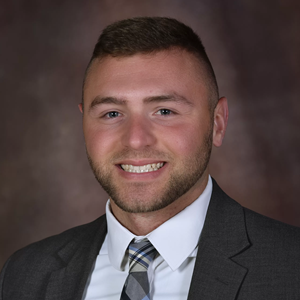
Collin Martin is one of the financial wellness managers who teaches these classes. He says it’s essential to understand the distinct financial challenges for those behind bars and meet them where they are.
“You’re not just there to give them that financial perspective. You’re also there to build trust with financial institutions that they might not have had in the past,” he says.
One of the biggest surprises for American 1 has been the enthusiasm among participants and the volume of questions.
“Some of these individuals are highly educated,” Martin says. “Once, I asked the crowd how you manage your credit card, and one individual spoke on it perfectly. Highlighting their knowledge and letting them speak, too, also builds trust because it’s not just coming from me.”
Importantly, credit union support doesn’t stop upon re-entry. When an inmate is released, American 1 makes sure their file includes direct contact information for the credit union.
“That way they know we’re there for them,” Martin says. “They know that there’s a resource for them on the outside and that people care about how they do when they walk out of those doors.”
Looking ahead, American 1 is examining the barriers to setting up accounts for participants before release. In the meantime, the credit union has designed products to help them rebuild or establish credit, including a secured card for the newly released and others in the community facing financial instability.