
For all their differences, many credit unions share a common problem: Too many old board members and not enough fresh blood.
APL Federal Credit Union ($680.8M, Laurel, MD) tackles that problem with an associate volunteer program. Now, it’s expanding those efforts to include an even younger demographic.

APL has had an associate volunteer program since 2012. It typically hosts three volunteers who attend board meetings, participate on committees, and more. Those roles have a one-year term, but most participants earn reappointment, provided the experience is mutually beneficial. And when it’s time for a board member to retire, the credit union has a pool of vetted replacement candidates.
“When openings come up on the board, there’s a group of people the nominating committee knows who are already engaged,” says CEO David Woodruff. “On Day 1 when they hit the board, they’re fully engaged.”
Still, APL had to face the reality that out of its nine-member board, generally two-thirds are retired. That beget the question of how to recruit younger voices to assure better representation. The answer? APL has broadened its horizons with a junior associate volunteer program of four college students.
“The board struggled with getting a commitment from younger people to take on board assignments,” Woodruff says. “Younger people typically have family responsibilities and kids and sports and all kinds of things obligating their time. It can be a challenge in those younger age ranges to get somebody who wants to commit to a three-year term.”
To involve younger volunteers and prepare them for service, APL taps its roots. The credit union has a community charter but was originally formed to serve employees of the Applied Physics Lab (hence APL) at Johns Hopkins University. APL leans on that experience to recruit college students to serve as junior associates.
“They do it for a year, and get the experience,” Woodruff explains. “It’s good for them, and it gets younger voices into our discussions.”
The ultimate aim is to build a pipeline for the associate volunteer role, but junior associates aren’t a shoo-in — they’ll still need to apply to move up to the next level.
In The Room Where It Happens
The current crop of junior volunteers includes four college students representing four different universities.
The credit union posted the position online, and Woodruff admits he thought it would be a challenge to attract candidates. Within two weeks, five applicants had applied. One wasn’t the right fit, but the credit union accepted the other four. Credit union membership is not required to apply, although applicants must be eligible for membership and must join the credit union before they can serve.
CU QUICK FACTS
APL FCU
HQ: Laurel, MD
ASSETS: $680.8M
MEMBERS: 30,900
BRANCHES: 2
EMPLOYEES: 57
NET WORTH: 11.6%
ROA: 1.01%
Volunteers in the associate program learn about the credit union and serve on a committee — either asset liability, information security, or planning and governance — but junior volunteers may attend various committee meetings to better understand the inner workings of the board and participate where appropriate.
The junior group also has four-on-one Zoom sessions with Woodruff and other executives to learn about how the credit union operates and the challenges it faces in various disciplines, including finance, marketing, lending, IT, and more.
In early January, APL brought associate and junior volunteers together with the board for its annual strategic planning session, with the event timed around when students were on their mid-semester break. The event was held in-person, and all participants were on-site at a hotel for the event, with associate and junior volunteers participating in breakout sessions and larger discussions. They then presented to the larger groups on key takeaways from breakout sessions.
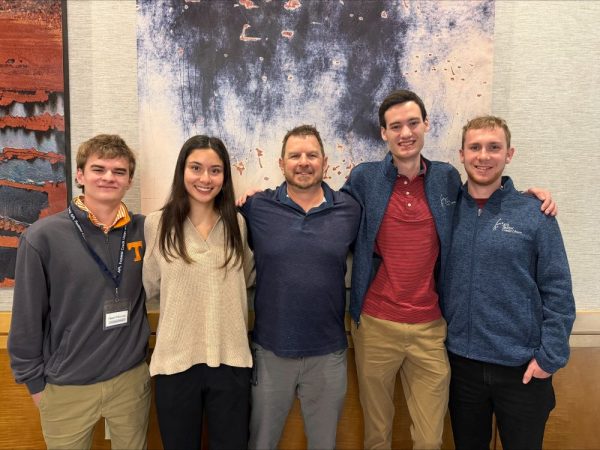
“That was the highlight of this year so far,” Woodruff says. “Their perspective was fantastic. “We’re talking about how to reach people in today’s world, and they all have very different perspectives on it, very different from the 60-year-olds and the rest of us.”
The younger cohort’s involvement also helped enliven the board, Woodruff adds. Including less-seasoned participants in the conversations has helped open directors’ eyes by bringing in the views of those who deal with financial services matters daily.
“It wasn’t like we just invited younger people into the meeting,” the CEO says. “They’ve been with us for months and have been very dedicated. They care about the issues of the credit union. They’re getting exposed to how an organization thinks about things and makes decisions and chooses directions at a high level. It’s exciting on both ends.”
Peer Participation
The junior volunteers do not receive college credit for their service, but the leadership experience makes a good addition to a resume, says Woodruff, particularly for those interested in careers related to banking, finance, and similar fields.
One of the key benefits for APL has been a strong, consistent pipeline of new blood that can step into board service.
“We all deal with the challenge of an aging board,” Woodruff says. “I don’t believe board members hang on just because they want to hang on. Oftentimes, I think they feel like if they leave there will be a void and there won’t be the same level of support for the staff and the credit union. When we bring the associates into the meetings, they don’t sit in the corner — they sit at the table and participate.”
Board Approval
Junior and associate participation has helped APL’s older volunteers feel confident that when they’re ready to step back, someone is prepared to step in, ensuring there won’t be a hole or gap in service.
Although junior and associate volunteers serve just one-year terms, the goal is that over time both programs will lead to a more diverse board. So far, things seem to be on track. Woodruff noted that one junior volunteer has already expressed interest in continuing on at the associate level if the opportunity arises.
Of course, board buy-in has helped the program gain momentum, says Woodruff. In fact, APL’s board drove the process, with one director in particular championing it. That led to greater buy-in than if Woodruff or another executive had pushed for younger participants, the CEO adds, since that might have seemed like existing directors were on the verge of being replaced. Woodruff says any early hesitation quickly faded once the new volunteers joined the boardroom.
“I think we were concerned that these college students would be intimidated by all these old people,” Woodruff says. “Certainly in the first couple of meetings they just listened, but as they attended other meetings and committees and our strategic planning retreat, they started sharing and participating as peers with the rest of the group.”
Do You Have A Strategy To Solve A Common Challenge? Credit unions are recruiting new volunteers by meeting them where they are. How are you responding to the evolving needs of volunteers? Callahan Roundtables put leaders in the same room to share solutions, solicit feedback, pose questions, and more. Inspiration is a Callahan Roundtable away. Learn more today.