
The May 2026 unemployment rate in the United States held stable at 4.3%, and the economy has yet to enter a prolonged recession despite repeated predictions. However, underlying data suggests conditions might be shakier than they appear. Inflation has crept back up, dragging real wage growth into negative territory.
MONTH-OVER-MONTH REAL WAGE GROWTH
FOR U.S. EMPLOYEES | DATA AS OF MAY 2026
SOURCE: Bureau of Labor Statistics
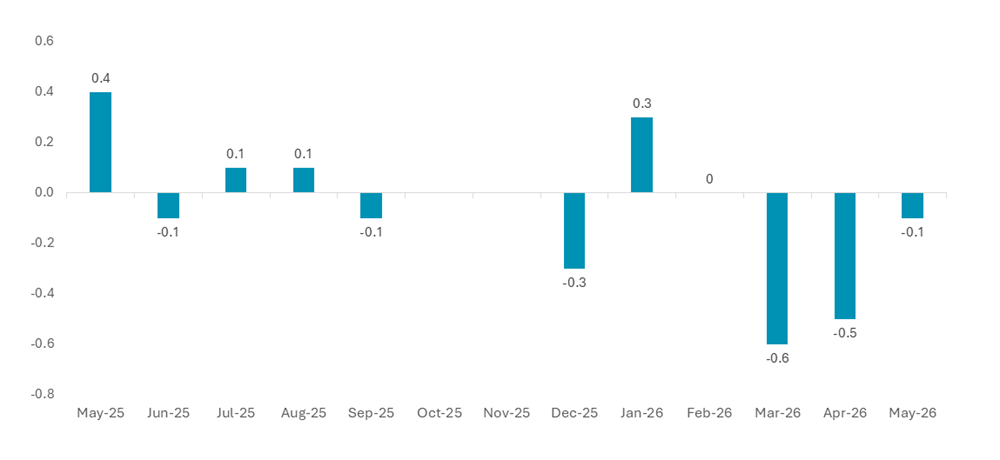
- According to the Bureau of Labor Statistics, from May 2025 to May 2026, real average hourly earnings decreased 0.7 percent, seasonally adjusted. Combined with an increase in hours, many employees are now working longer for less inflation-adjusted pay.
- At the close of 2025, wages appeared to finally outpace inflation, making up for the 2021-22 inflationary period; however, a renewed rise in the consumer price index beginning in early 2026 pushed many households behind again.
- For credit unions, this could mean reduced deposits and more members falling behind on loan payments, especially in credit cards where higher prices show up most directly.
- Credit unions are well-positioned to support members through this period. Refinancing opportunities can help those paying off high-interest loans elsewhere, whereas competitive savings rates can attract deposits and help members pad their pocketbook.