What’s In A Name: Chief Efficiency Officer
Kelli Wisner-Frank serves as the linchpin between finance and innovation at Community Choice Credit Union, aligning automation, smarter processes, and cost discipline to turn front-line

Your hub to learn how credit unions manage assets and liabilities, boost non-interest income, improve efficiencies and productivity, and maximize returns.
Kelli Wisner-Frank serves as the linchpin between finance and innovation at Community Choice Credit Union, aligning automation, smarter processes, and cost discipline to turn front-line
Craft breweries demonstrate how commitment to value, operational agility, and community focus can ignite growth and drive property.
Inflation, debt, and income inequality are fueling a K-shaped, post-pandemic recovery, widening the gap between different economic segments and challenging lower-income households.
Credit unions are operating from a position of strength; now, credit union leaders want to leverage that strength to have a greater impact on their members and communities in the area of financial health.
Moral arguments aside, Pentagon CEO Frank Pollack states that a strong business case can be made against conversions. The math is simple: the credit union charter is best for members.
After a lengthy re-scoring process of 35,000 credit card holders, SAFE Credit Union used their service bureau’s Trigger Alerts to help manage the process.
Legacy FCU in Birmingham aggressively began positioning itself in the marketplace several years ago and now is reaping rewards.
North Island Credit Union put in place a rigorous cost-cutting regime as soon as the economic crisis hit.
America First Federal Credit Union added six new branches in 2007 to their existing 70.
Tyndall’s performance-based culture maximizes efficiency and incentivizes employees.
At the end of 2008 Northeast Credit Union ($643M in Portsmouth, NH) posted 29.8% loan growth, 19.6% share growth and 20.5% member growth. A conversation with their President and CEO, Peter Kavalauskas, revealed the dedication to the cooperative’s success through new initiatives, solid execution, and an excellent market.
Bank mergers and acquisitions, both large and small, provide a crucial opportunity for increasing membership and deposits in credit unions, as typically twenty percent of the disappearing bank’s deposits will change financial institutions within a year.
In the short-term, Mountain America’s ROA plunges but the merger that caused it looks like a long-term winner.

How a former Sam’s Club finance leader adapted his member-first mindset to a not-for-profit credit union.

The Michigan cooperative keeps everyday payments working and members happy by using a common friction point to build brand loyalty.

How a unique role instills SchoolsFirst FCU’s future leaders with an appreciation for its past.

Arriba Advisors co-founder Tom Russell explores how credit unions can bridge the gap between a growth mindset and their technical reality.

RKL offers insight, expertise, and experience to help fight off growing threats.

Members are anxious about their financial futures, even as credit unions remain financially strong. Institutions that respond to this moment can make 2026 a turning point.

Global events are flowing directly into household budgets, reshaping how credit union members save, borrow, and cope. Such trends don’t always show up in headline data.

Credit unions are benefiting from a rare margin advantage as loans reprice slower than deposits. The question now is how institutions will use that strength to better serve members.

Membership growth is slowing, but financial activity is not. What does the modern financial relationship look like?

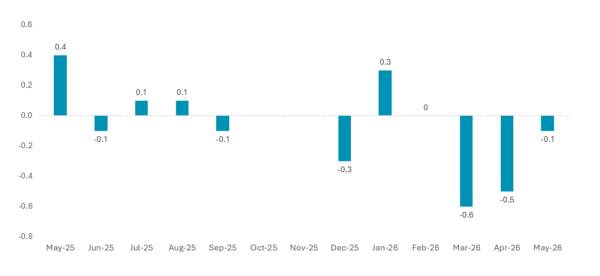
Inflation, war, and uncertain futures have reshaped members’ needs in 2026. What does credit union performance data from the first quarter of 2026 say about household budgets, inflation pressures, and more?
Purpose Drives Performance