What’s In A Name: Chief Efficiency Officer
Kelli Wisner-Frank serves as the linchpin between finance and innovation at Community Choice Credit Union, aligning automation, smarter processes, and cost discipline to turn front-line

Your hub to learn how credit unions manage assets and liabilities, boost non-interest income, improve efficiencies and productivity, and maximize returns.
Kelli Wisner-Frank serves as the linchpin between finance and innovation at Community Choice Credit Union, aligning automation, smarter processes, and cost discipline to turn front-line
Craft breweries demonstrate how commitment to value, operational agility, and community focus can ignite growth and drive property.
Inflation, debt, and income inequality are fueling a K-shaped, post-pandemic recovery, widening the gap between different economic segments and challenging lower-income households.
Insight into the drivers of 1Q18’s revenue growth.
Despite numbering only 19, credit unions in Vermont turned out an impressive performance.
With so many variables in play it can be very difficult to forecast and budget for your credit card program. This session will provide up-to-date information on market performance expectations for the coming year as well as suggested planning structures and expectations for any credit union that takes its card program seriously.
Everyone knows that credit unions have advantages envied by many large banks. Many of these advantages have to do with member stability, information and affinity. This session will offer insights into how a credit union can use best-in-class information, both external and internal, to make the most of its credit card program.
To keep your card program healthy, an understanding of current profitability levels and long-term pressures is critical. This session provides the tools, models, and techniques valuable to all credit unions that either currently issue credit cards or are considering doing so.
Five can’t-miss data points this week on CreditUnions.com.
Look at the shape of the yield curve within the context of other factors in the economy and not as a stand-alone predictor of recession.
Credit unions added 4.7 million net new members in the past 12 months, and the NCUA’s equity distribution helped push ROA to 0.90%. What else happened in the first quarter?
Low unemployment, worker shortages, and normalized bad behavior has given rise to a new trend.
Five can’t-miss data points this week on CreditUnions.com.

The Michigan cooperative keeps everyday payments working and members happy by using a common friction point to build brand loyalty.

How a former Sam’s Club finance leader adapted his member-first mindset to a not-for-profit credit union.

How a unique role instills SchoolsFirst FCU’s future leaders with an appreciation for its past.

Arriba Advisors co-founder Tom Russell explores how credit unions can bridge the gap between a growth mindset and their technical reality.

RKL offers insight, expertise, and experience to help fight off growing threats.

Members are anxious about their financial futures, even as credit unions remain financially strong. Institutions that respond to this moment can make 2026 a turning point.
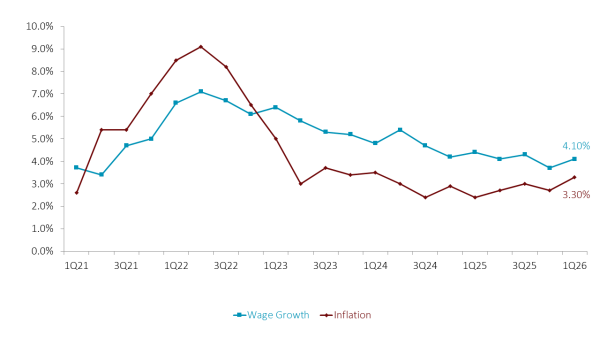
Global events are flowing directly into household budgets, reshaping how credit union members save, borrow, and cope. Such trends don’t always show up in headline data.
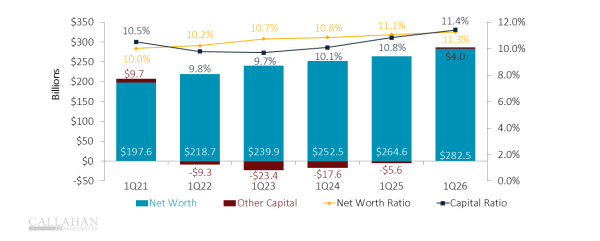
Credit unions are benefiting from a rare margin advantage as loans reprice slower than deposits. The question now is how institutions will use that strength to better serve members.
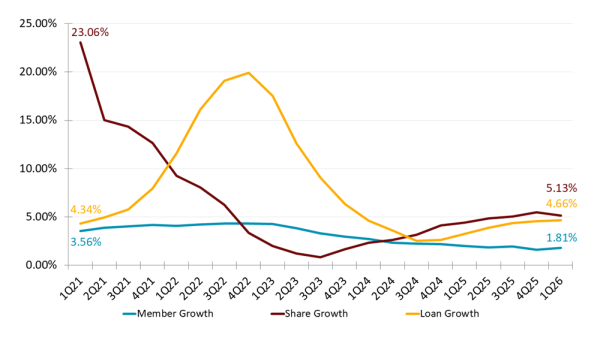
Membership growth is slowing, but financial activity is not. What does the modern financial relationship look like?
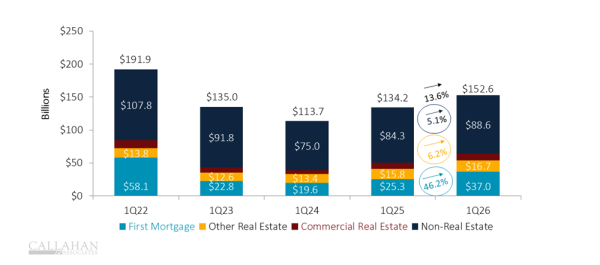
Inflation, war, and uncertain futures have reshaped members’ needs in 2026. What does credit union performance data from the first quarter of 2026 say about household budgets, inflation pressures, and more?
Flat Curves And Low Rates