Taking the High and Low Road to Boosting the Auto Portfolio
Never has the competition for auto loans been so fierce. Find out how one credit union is rethinking strategies to aggressively capture these loans.
There is what some will call financial illiteracy in this country. It is broad, deep and very widespread. It works much to the disadvantage of credit unions and to the advantage of banks and lending corporations. What can credit unions do to turn this around, help members and increase advertising success?
When Navy Federal decided to form a CUSO to offer investment and insurance services to members, it was a seismic indicator of the changing financial needs of members of the world’s largest credit union. Learn how they set program goals, what services they provide, and what they expect from the future.
Because privacy concerns are important to credit union members, Power 1 Credit Union Senior Vice President of eBusiness and Communication Brian Warfel said the CU approached its email marketing program very carefully.
note: This is part two of a two part case study profile by Carol Anne Burger on the importance of MBL for some credit unions. The recently released Treasury Study on member business lending in credit unions is a hot topic of discussion for many credit unions.
Credit unions exist to serve members, and the Return of the Member (ROM) scoring system is designed to measure how well credit unions live up to this task.
Superior experiences don’t start when members walk through the door; they start when employees commit to WOW service.
Planning ahead both retains talent and eases the transition when a talented manager leaves.
Product meets marketing meets members in this small-town credit union that delivers high-tech solutions.
This week, CreditUnions.com gets in the spring cleaning spirit by featuring articles and graphics on how credit unions are simplifying operations, paring down documents, and closing inactive checking accounts.

Credit unions are making decisions about where to build, invest, and partner as they balance today’s priorities with tomorrow’s opportunities.

Industry leaders share how they approach fintech investment, balancing immediate needs with longer-term bets while keeping member value and mission at the center.

Credit unions that enable seamless movement between fiat and digital assets position themselves as a trusted on- and off-ramp.

The credit unions that win the next generation will be the ones that showed up early, when young members were forming habits and deciding whom to trust.

The challenge is no longer whether to adopt AI, but how to adopt it responsibly with the right governance, the right partners, and the right balance between technology and human oversight.
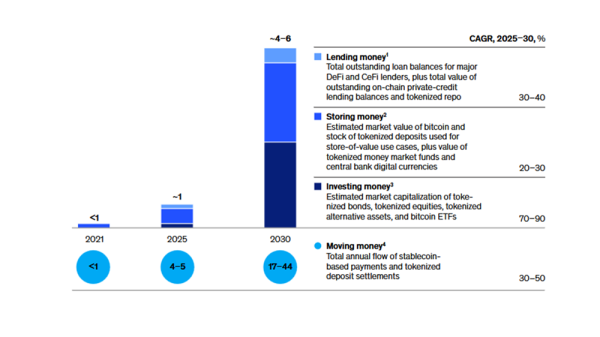
McKinsey projects trillions of dollars in growth across digital assets, with money movement emerging as one of the biggest opportunities.

The Indiana cooperative blends internal development with selective partnerships to meet members’ needs today now while positioning for what’s next.

The San Diego cooperative leans on its CUSO and the CURQL network to make fintech investments, but member needs still guide which solutions ultimately make it into the credit union’s operations.

Hands-on work with artificial intelligence tools is future-proofing staff members, giving them the confidence to adopt new technology and embrace efficiencies.

Wages briefly caught up with inflation, but rising costs have pushed them back into negative territory. Here’s what that shift means for member finances and credit union performance.