Exit Interview: Dave Roughton, SAFE Credit Union
From the coin vault to the corner office, Dave Roughton looks back on a career and to the future of an industry with impact in mind.

A look at the lending performance of credit unions in Kansas City and Philadelphia offers a novel way to forecast the winner of this year’s big game.
Credit union lending boomed last year. What’s in store for this year?
Top-Level Takeaways Atomic Credit Union operates 58 student-run school branches. Graduated student-run branch members account for approximately 5% of total membership and 12% of digital transactions. The credit union’s average member age is 42 but aims to reduce that to 35. Growing new business among young adults is imperative for any financial institution. Credit unions
As we celebrate the holiday season, the office of Callahan & Associates will be closed Dec. 26 through Jan. 2. Enjoy this selection of the best of 2022, and we’ll see you in 2023. A Call For Cooperatives To Close The Racial Homeownership Gap GreenState Credit Union has committed $1 billion toward home loans
A confluence of major factors have resulted in some of the weakest share growth in several years.
A look back at the Great Recession and subsequent industry performance offers an understanding of risks and opportunities in the current economic climate.
A charter change and FOM expansion prompted Kern Schools FCU to rebrand as Valley Strong, but it’s a new growth mindset that has turned the cooperative into a financial force.
Callahan & Associates surveyed 333 credit unions to learn about automated decisioning practices in the consumer lending portfolio. Read about the results in this interactive article.
Bob Falk joined Purdue Federal Credit Union ($1.8B, West Lafayette, IN) in August 2002 as the vice president of lending at what was then Purdue Employees FCU. He took the helm in 2008 and since then, the cooperative has rebranded, tripled in assets, doubled in staff size, and grown membership from 57,000 to more than

Credit unions are making decisions about where to build, invest, and partner as they balance today’s priorities with tomorrow’s opportunities.

Industry leaders share how they approach fintech investment, balancing immediate needs with longer-term bets while keeping member value and mission at the center.

Credit unions that enable seamless movement between fiat and digital assets position themselves as a trusted on- and off-ramp.

The credit unions that win the next generation will be the ones that showed up early, when young members were forming habits and deciding whom to trust.

The challenge is no longer whether to adopt AI, but how to adopt it responsibly with the right governance, the right partners, and the right balance between technology and human oversight.
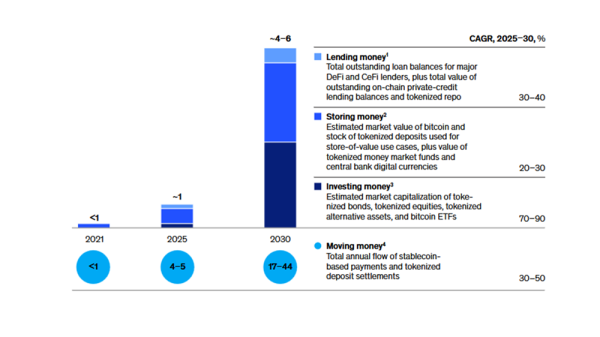
McKinsey projects trillions of dollars in growth across digital assets, with money movement emerging as one of the biggest opportunities.

The Indiana cooperative blends internal development with selective partnerships to meet members’ needs today now while positioning for what’s next.

The San Diego cooperative leans on its CUSO and the CURQL network to make fintech investments, but member needs still guide which solutions ultimately make it into the credit union’s operations.

Hands-on work with artificial intelligence tools is future-proofing staff members, giving them the confidence to adopt new technology and embrace efficiencies.
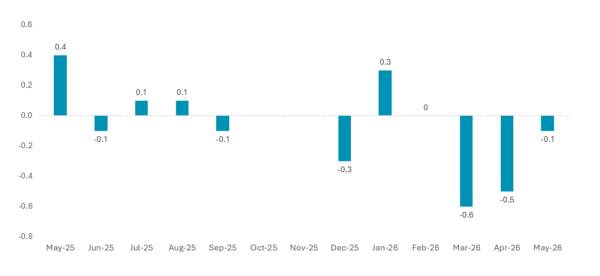
Wages briefly caught up with inflation, but rising costs have pushed them back into negative territory. Here’s what that shift means for member finances and credit union performance.