Michigan State University Federal Credit Union ($8.2B, East Lansing, MI) is giving risk and compliance a rebrand. Instead of being the department known for “no,” the cooperative is reframing it as an enabler, one focused on making sound ideas workable and asking, “Is this possible?”
That shift is embodied in James Hunsanger’s role as chief strategic enablement officer, a title that signals how the organization now thinks about risk, decision‑making, and growth.
How did your career path lead to your current role?
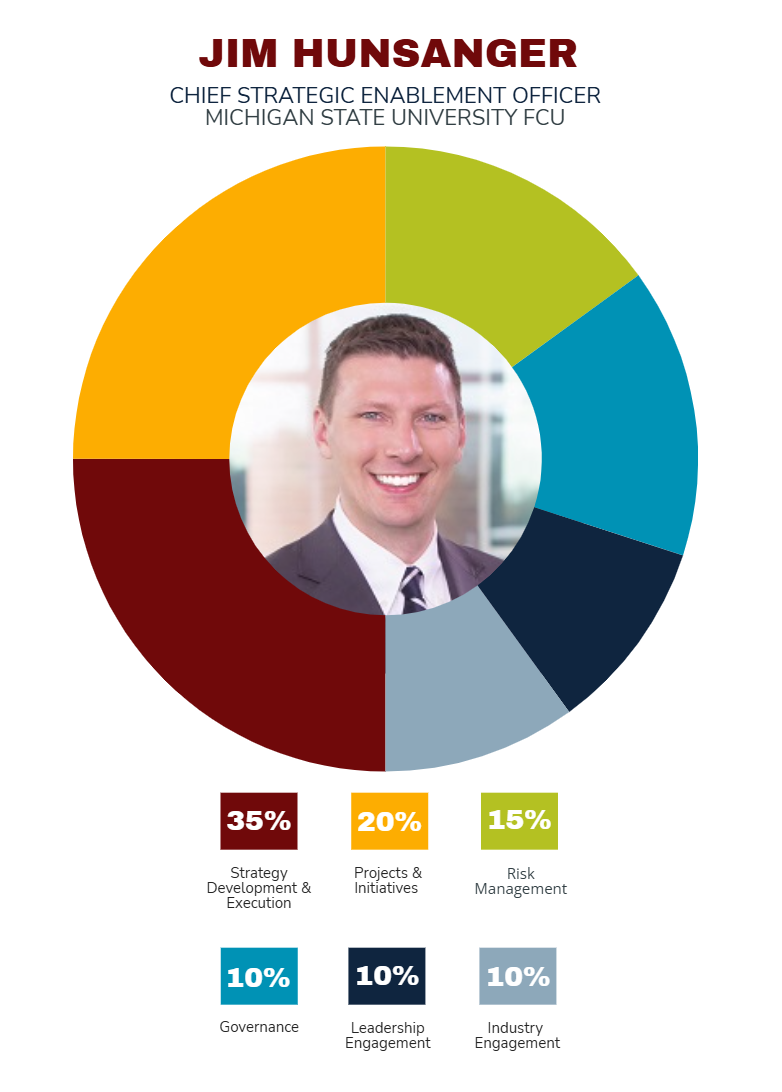
James Hunsanger: My career started in public accounting, auditing banks, credit unions, and insurance companies. I joined the credit union’s executive team in 2011 as vice president of internal audit and ran the audit department for several years.
In 2016, we needed to build out a formal risk management division, so I was given the opportunity to create that program and establish a traditional risk management function, including compliance. Over the years, that area continued to grow. We added collections and credit risk, fraud prevention, BSA, information security, and legal. Then, facilities, operations, and construction management also came under my responsibility.
From 2016 until just last year, I served as chief risk officer. In 2025, we rebranded the division as Strategic Enablement, and my role became strategic enablement officer.
Why “strategic enablement?” How does it reflect the direction the credit union wants to go?
JH: Although we were technically the risk management division, we had all these other functions under our responsibility: operations, credit risk and fraud prevention account servicing, back-office legal work, information security, and even real estate design and construction. We’re deeply involved in real estate strategy, such as where we expand branches, how we design facilities, and how we express our brand through physical spaces. None of that fits under traditional risk management.
We started hearing other organizations use the term “enablement,” and when we looked it up, one definition really resonated: making things possible. That’s exactly what we do. Whether it’s operations, credit risk, information security, or facilities, we’re here to make initiatives possible. We’re creating spaces for members and employees that enable them to do their jobs or achieve their goals. That’s what drove the rebrand.
Are there any misconceptions about your role?
JH: A lot of times, functions like risk management, legal, or information security are seen as inhibitors to progress, but we’ve never taken that approach. Instead, we ask: how do we make initiatives possible in a way that’s safe, secure, efficient, and effective?
What is the No. 1 skill you need to do your job?
JH: Being able to communicate across multiple divisions. Because we’re involved in so many strategic initiatives, we have a broad view of the organization.
We often connect with teams that don’t realize they have dependencies or conflicts. We’ll say, “You have an initiative here, they have one there. These are going to clash, or they’re going to align really well. You need to get in a room together.”
It’s about collaboration and enabling communication across the credit union. That’s what makes the role successful.
CU QUICK FACTS
MSUFCU
HQ: EAST LANSING, MI
ASSETS: $ $8.2B
MEMBERS: 389,605
BRANCHES: 34
EMPLOYEES: 1,392
NET WORTH: 8.5%
ROA: 0.29%
What part of your role energizes you? Conversely, what part challenges you the most?
JH: What energizes me is having a meaningful part in so many strategic initiatives. We want to be innovative, progressive, and push the envelope on what it means to be a credit union and serve our members. Getting to be a part of that energizes me.
The challenge is keeping up with everything: operational changes, technological changes, regulatory shifts, economic changes. Supporting initiatives over time isn’t easy, but that’s what we’re called to do.
How do you define success in your role?
JH: At a high level, it’s launching projects successfully and as timely as possible. But more than that, success is being proactively brought into strategic conversations. When our division is asked to participate, it shows our contributions are valued and seen as necessary for project success.
What are you looking forward to in 2026?
JH: Growth. We completed two bank acquisitions last year and are working on two more this year. We’re also expanding digital brand partnerships, rolling out a new account and loan origination system, pursuing branch growth, and supporting internal AI and automation initiatives. Those are especially exciting because they’ll drive operational improvements internally while also impacting members.
What would make you tell another credit union it needs this role?
JH: If you’re looking for a coordinated approach to ensure the success of strategic projects, this kind of role can help. As organizations grow larger and more complex, you need leadership that can collaborate across divisions and be meaningfully involved in initiatives. A role like this helps shepherd those strategic efforts along.
This interview has been edited and condensed.
Job titles say as much about the organization as they do the person. “What’s In A Name” on CreditUnions.com dives into notable, important, interesting, or just plain fun roles to find out what’s happening at the ground level and across the industry. Read the series today.